
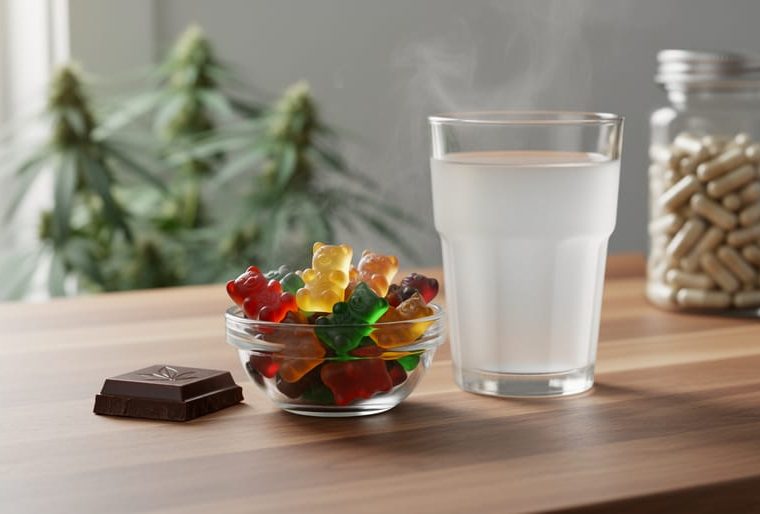
Hemp-derived CBD edibles are food and beverage products infused with cannabidiol extracted from industrial hemp plants containing less than 0.3% THC, offering consumers a non-intoxicating way to experience potential therapeutic benefits like stress relief and improved sleep. These products sit at the intersection of wellness culture and cannabis legalization, regulated differently than Exhale Wellness THC products and subject to evolving federal oversight. With the regulatory landscape shifting significantly in November 2025, understanding what to know about sourcing, labeling, and safety has become essential for both first-time buyers and longtime users.
The appeal is straightforward. CBD edibles deliver cannabidiol through familiar formats like gummies, chocolates, baked goods, and beverages, bypassing the learning curve of tinctures or vaporizers. Effects typically begin within 45 to 90 minutes and last four to six hours, making them popular for managing chronic discomfort or unwinding after work. Unlike THC edibles, you won’t experience a high, though some users report mild relaxation or improved focus.
Legal status depends on extraction source and THC content. The 2018 Farm Bill legalized hemp-derived CBD federally, but state regulations vary widely. Some jurisdictions treat these products like dietary supplements, while others impose strict testing and labeling requirements. Recent federal guidance has tightened manufacturing standards, requiring third-party lab testing and clearer dosage information on packaging.
Quality varies dramatically across brands. Reputable manufacturers provide certificates of analysis confirming CBD content and verifying the absence of pesticides, heavy metals, and excess THC. Sarah Chen, a dispensary owner in Portland, notes that customer confusion about potency and onset time remains the biggest education challenge. “People expect immediate effects like ibuprofen, but edibles work on a different timeline,” she explains.
This guide clarifies the science, regulation, and practical considerations for choosing and using hemp-derived CBD edibles safely in 2026.
Understanding Hemp-Derived CBD Edibles
The Hemp vs. Marijuana Distinction
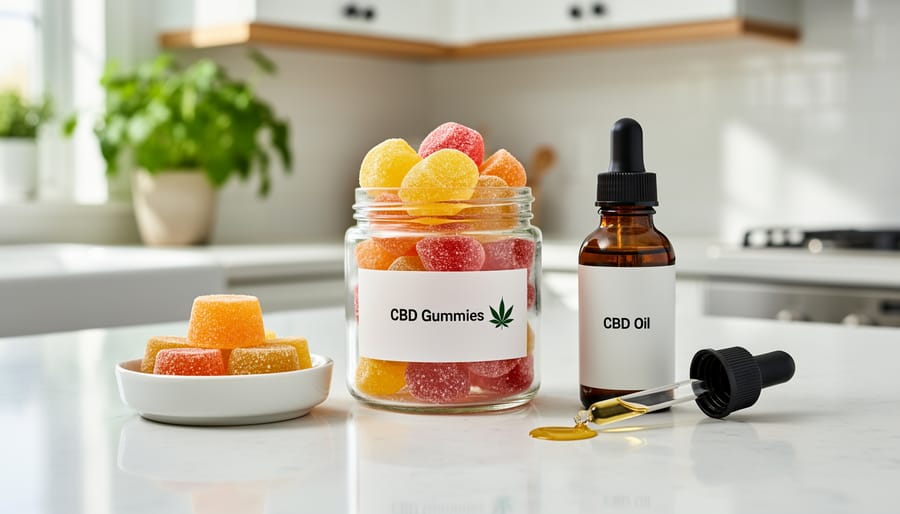
Hemp and marijuana are both varieties of Cannabis sativa, but they differ fundamentally in their chemical composition and legal status. The key distinction comes down to THC concentration. In most jurisdictions, including the United States under the 2018 Farm Bill, hemp is legally defined as cannabis containing 0.3% THC or less by dry weight. This 0.3% THC hemp threshold transforms what would otherwise be a controlled substance into an agricultural commodity.
Marijuana, conversely, refers to cannabis plants exceeding this 0.3% threshold. These plants produce significantly higher THC levels and remain federally restricted in many places, though individual jurisdictions vary widely in their approaches.
For edible production, this distinction matters enormously. Hemp-derived CBD starts from compliant plant material, meaning manufacturers work with a legally accessible raw ingredient. The challenge lies in processing and formulation: even hemp can concentrate THC during extraction, which is why finished CBD edibles face strict limits. In Canada, the November 2026 rule tightens this to just 0.4 mg total THC per finished container, a dramatic reduction from the previous 10 mg per immediate container standard.
This botanical and legal divide shapes everything from cultivation practices to product availability. Hemp farmers operate under agricultural regulations, while marijuana cultivators navigate cannabis-specific licensing systems. For consumers, it means hemp-derived CBD edibles occupy a distinct market space, theoretically more accessible yet still tightly controlled to prevent psychoactive effects.
How CBD Works in Edible Form
When you consume a CBD edible, the cannabidiol takes a significantly different route through your body than it would with vaping or sublingual oils. The edible passes through your digestive system, where stomach acids and liver enzymes break it down before the CBD enters your bloodstream. This process, called first-pass metabolism, means that onset times are considerably slower, typically 30 to 90 minutes before you notice effects, sometimes longer depending on what else you’ve eaten.
The trade-off for this delayed onset is duration. While inhaled CBD might offer relief for one to three hours, edibles can provide effects lasting four to six hours or more. This extended window makes edibles particularly appealing for people managing chronic discomfort or seeking sustained support throughout a workday or night’s sleep.
Absorption rates vary more with edibles than other methods. An empty stomach speeds things up but may reduce overall absorption, while consuming CBD with fatty foods can enhance bioavailability, the percentage of CBD that actually reaches your bloodstream. Individual factors matter too: your metabolism, body weight, and even your unique endocannabinoid system influence how quickly and intensely you’ll feel effects.
This slower, steadier release means edibles require patience and planning. You can’t titrate your dose in real time the way you might with a vape pen. Start low, wait the full 90 minutes before considering more, and track what works for your body over multiple sessions.
The November 2026 Regulatory Shift: What You Need to Know
Why Regulators Tightened THC Limits
The dramatic reduction from 10 mg to 0.4 mg of THC per container reflects regulators’ response to several converging concerns. Public health officials grew increasingly worried about accidental consumption, particularly among children who might mistake brightly packaged hemp-derived products for regular candy or snacks. Reports of emergency room visits and calls to poison control centres highlighted gaps in the existing framework, where products marketed as “CBD-only” sometimes contained enough THC to produce unexpected psychoactive effects in vulnerable populations.
Regulators also faced pressure to close what some viewed as a loophole: manufacturers were producing hemp-derived edibles that technically met the per-container limit but contained multiple servings, creating confusion about actual THC exposure per use. The tighter standard aims to eliminate ambiguity and reduce the risk of unintentional intoxication, even if someone consumes an entire package. This shift prioritizes consumer safety and clearer boundaries between non-intoxicating CBD products and regulated cannabis edibles, though it has forced manufacturers to reformulate established product lines and reconsider how they deliver CBD in edible form.
Impact on Product Formulation and Consumer Choice
The dramatic shift from 10 mg to 0.4 mg of THC per container has forced manufacturers to rethink their entire product lines. Some companies are removing THC entirely from CBD edibles, while others are creating separate product tiers to meet the new threshold. This reformulation work isn’t trivial, it requires adjusting extraction processes, sourcing hemp varieties with naturally lower THC profiles, and retesting every batch to ensure compliance.
For consumers, the immediate impact is more limited product variety in the hybrid CBD-THC space. Those pre-November 2026 products that balanced 5-8 mg of THC with higher CBD doses are disappearing from shelves. What remains are purer CBD options with trace or zero THC content. This narrowing may frustrate experienced users who appreciated the subtle interplay between cannabinoids, but it also creates clearer choices for newcomers nervous about any psychoactive effects.
The shift has another consequence: expect to see CBD edibles marketed more explicitly for wellness rather than recreation. With negligible THC, manufacturers are leaning harder into specific use cases, sleep support gummies, daytime focus mints, post-workout recovery bars, to differentiate their offerings. Product counts may shrink, but what survives will likely carry more targeted positioning and transparent testing documentation. Consumers should view this as a temporary shakeout period while the industry adapts to stricter guardrails.
Legal and Licensing Requirements for CBD Edible Production
Who Needs a Processing License
The line between legal and regulated activity becomes clear when money changes hands. If you’re making hemp-derived CBD edibles at home for your own consumption, you don’t need government permission. The moment you plan to sell those products, whether through a storefront, online, or at a farmers’ market, you must obtain a processing license from Health Canada.
This licensing requirement applies to anyone who manufactures, packages, or labels CBD edibles intended for commercial sale. It covers everything from large-scale production facilities to small artisan operations. The distinction isn’t about volume or business size; it’s about intent to distribute for profit. Even giving away products as promotional samples falls into a regulatory gray area that many processors choose to avoid by treating all distribution as if it requires licensing.
The application process involves demonstrating your facility meets good production practices, maintaining detailed record-keeping systems, and establishing compliance standards that satisfy federal inspectors. You’ll need to show proper storage protocols, contamination controls, and accurate dosing capabilities. Health Canada reviews these applications thoroughly, and approval timelines typically span several months.
Once licensed, you’re subject to regular inspections and ongoing reporting requirements. Your products must meet the current THC limits, including the 0.4 mg total THC cap taking effect in November 2026, and pass standardized testing before reaching consumers. The investment in licensing isn’t trivial, but it’s the legal foundation for anyone turning kitchen experiments into a commercial venture.
Cross-Border Restrictions and Travel Considerations
Despite their legal status within Canada, hemp-derived CBD edibles remain firmly off-limits for cross-border transport. Federal law explicitly states it’s illegal to take cannabis products across the Canadian border in either direction, regardless of THC content, legal status in your destination, or personal medical needs. This applies to all cannabis-containing products, including your carefully sourced, compliant CBD gummies.
The prohibition extends to air, land, and sea crossings. Border agents have the authority to search luggage and vehicles, and declaring your CBD edibles won’t grant you passage. Violations can result in fines, criminal charges, and future travel complications. Even traveling to U.S. states where cannabis is legal doesn’t change the federal restriction.
If you travel regularly and rely on CBD edibles for wellness support, plan accordingly. Purchase products at your destination if local laws permit, or consider alternative forms of support during your trip. Some travelers switch to topical CBD products before departure, though these face the same border restrictions. The safest approach? Leave all cannabis products, including hemp-derived CBD edibles, at home. Your commitment to wellness shouldn’t come at the cost of legal trouble or travel delays.
Popular Types of Hemp-Derived CBD Edibles
The Canadian hemp-derived CBD edibles market offers consumers several distinct product formats, each with unique characteristics that suit different preferences and situations. Understanding these options helps you choose products that align with your lifestyle and wellness goals.
Gummies dominate the market for good reason. These colorful, pre-dosed products appeal to both newcomers and experienced users because they’re discreet, portable, and come in precise serving sizes that eliminate guesswork. You’ll find them in fruit flavors that mask CBD’s natural earthiness, making them palatable for those sensitive to hemp’s taste. Gummies work well for maintaining consistent daily routines since each piece contains a known amount of CBD.
Chocolates and confections represent the premium segment. Quality CBD chocolates combine the compound’s potential benefits with the pleasure of fine chocolate, and the fat content in cocoa butter may help with CBD absorption. These products suit social settings and gift-giving, though they require careful storage to prevent melting.
Baked goodscookies, brownies, and similar treats, offer familiarity and comfort. They typically contain higher CBD doses per serving than gummies, making them economical for regular users. The homestyle appeal resonates with people who prefer traditional food formats over supplements.
Beverages including CBD-infused teas, coffees, and sparkling waters provide hydration alongside your serving. These work particularly well for morning or afternoon routines when you’d normally have a drink anyway. The liquid format may offer slightly faster onset than solid foods since liquids begin absorption in the mouth and stomach lining.
| Edible Type | Typical Onset | Duration | Best Use Scenario |
|---|---|---|---|
| Gummies | 30-90 minutes | 4-6 hours | Daily routine, precise dosing |
| Chocolates | 30-60 minutes | 4-6 hours | Social settings, evening relaxation |
| Baked Goods | 45-120 minutes | 6-8 hours | Extended relief, cost-effectiveness |
| Beverages | 15-45 minutes | 3-5 hours | Morning routines, faster onset needs |
Tincture-infused foods blur the line between edibles and sublingual products. Some consumers add CBD tinctures to smoothies, salad dressings, or other recipes, gaining flexibility in dosing while incorporating CBD into meals they already enjoy.
The format you choose matters less than consistency and quality. Many users keep multiple types on hand, gummies for travel, chocolates for evenings, beverages for mornings, adapting their choice to the day’s demands. With the November 2026 regulatory changes limiting total THC to 0.4 mg per container, you’ll find these products increasingly focused on CBD’s benefits without concerns about intoxicating effects.
Making Your Own Hemp-Derived CBD Edibles at Home
Calculating Proper Dosage
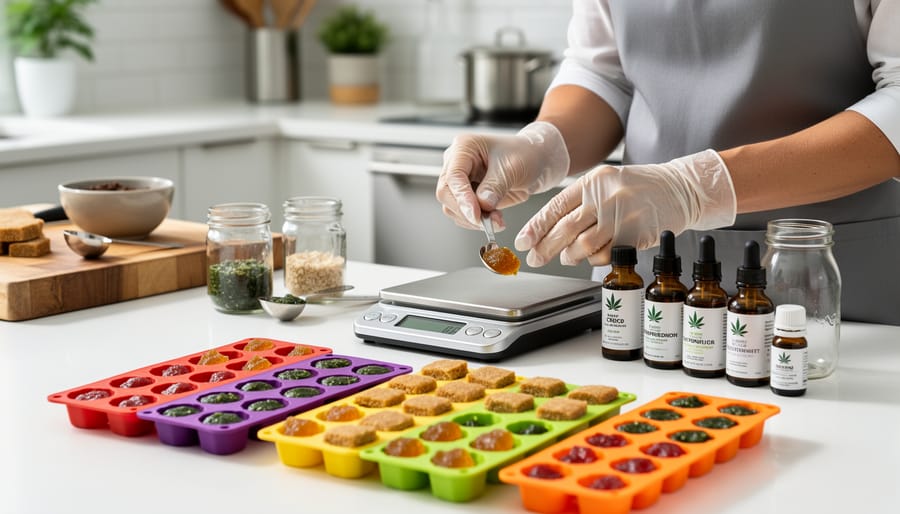
Accurate dosing starts with knowing the total CBD content in your starting material. If you’re using a commercial CBD oil or isolate, check the product label for milligrams per milliliter or per gram. For example, if you have a 30 mL bottle containing 1,500 mg of CBD, that’s 50 mg per milliliter. When infusing into butter, oil, or another carrier, multiply the amount you use by its concentration to find total CBD, then divide by the number of servings your recipe yields. If you add 10 mL of that oil (500 mg CBD) to a batch of 20 cookies, each cookie contains roughly 25 mg of CBD.
Bioavailability complicates the math. Edibles generally have a bioavailability of 6 to 15 percent, meaning your body absorbs only a fraction of the CBD you consume. A 25 mg cookie might deliver 1.5 to 3.75 mg to your bloodstream. This is why CBD dosing recommendations often start at 10 to 20 mg per serving for beginners, allowing room for individual variation.
Individual tolerance also plays a major role. Factors like body weight, metabolism, prior cannabis use, and the specific condition you’re addressing all influence how much CBD you need. Start low, 5 to 10 mg if you’re new, and increase gradually over several days until you notice the desired effect. Keep a simple log noting dose, timing, and results to identify your personal sweet spot. Consistency in preparation and measurement is key to predictable outcomes.
Recipe Adaptation Tips
Adapting your favourite recipes for CBD starts with understanding heat tolerance. CBD degrades at temperatures above 320°F (160°C), so add it after cooking whenever possible, stirring tincture or oil into finished brownies, sauces, or frostings preserves potency better than baking it in from the start. For recipes that require heat, keep temperatures moderate and cooking times short. Low-and-slow methods like gentle simmering work well for infused butter or coconut oil, which you can then use as a fat replacement in any dish.
CBD carries a slightly bitter, earthy flavour that some find off-putting. Mask it by pairing with strong complementary tastes: chocolate, peanut butter, honey, citrus, mint, or vanilla all work beautifully. Dense, rich recipes like brownies, energy balls, or smoothies hide the taste more effectively than delicate pastries. Start with small amounts, don’t dump your entire measured dose into a single cookie if you’re making a batch; instead, calculate the CBD per serving and distribute it evenly across the recipe to ensure consistent dosing in every portion. Mix thoroughly to avoid “hot spots” where CBD concentrates unevenly, and always label homemade edibles with the approximate CBD content per piece.
Health and Wellness Applications
Common Uses and Reported Benefits
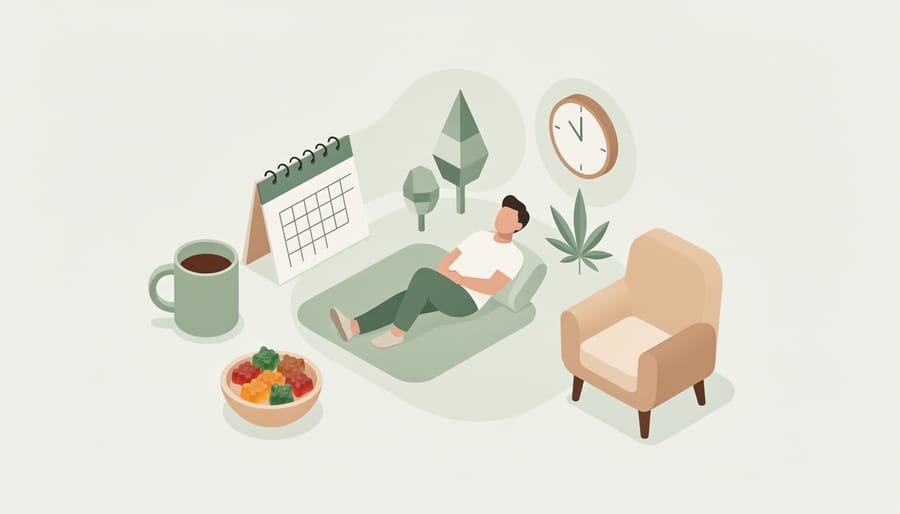
People turn to CBD edibles for a diverse range of wellness goals, making them one of the most versatile hemp-derived products on the market. Sleep support ranks among the most common reasons consumers choose these products, with many reporting that a CBD gummy or chocolate taken an hour before bed helps them relax and establish more consistent sleep patterns. Those managing everyday discomfort, whether from physical activity, workplace strain, or chronic tension, frequently incorporate CBD edibles into their routines, valuing the sustained release that comes with digestive absorption.
Stress and occasional anxiousness drive another significant portion of CBD edible use. The discreet, pre-dosed format appeals to professionals and students who want a measured approach to managing daily pressures without drawing attention. Some consumers report that CBD edibles help them maintain focus during demanding tasks, while others use them specifically during recovery periods after intense workouts or long workdays.
Beyond these primary applications, people explore CBD edibles for digestive comfort, menstrual discomfort, and general wellness maintenance. The sample benefits individuals experience vary considerably based on dosage, product quality, individual body chemistry, and consistency of use, which is why tracking personal responses becomes crucial for anyone incorporating these products into their wellness toolkit.
Setting Realistic Expectations
CBD edibles aren’t a cure-all, and understanding their real potential helps you avoid disappointment. While many users report benefits for sleep, everyday stress, and general discomfort, CBD doesn’t work the same way for everyone. Individual responses vary based on body chemistry, product quality, and dosage. Some people experience noticeable relief within days, while others see subtle shifts over weeks, or none at all. Research is still catching up with consumer enthusiasm, so treat dramatic marketing claims with skepticism and remain wary of common CBD myths that oversell what the compound can deliver.
Quality sourcing matters enormously. Products that lack third-party lab testing or certificates of analysis may contain inconsistent CBD levels, contaminants, or misleading THC content, especially critical given the November 2026 regulations. If you’re using CBD for a specific health concern, consult a healthcare professional before starting, particularly if you take other medications or have underlying conditions. CBD can interact with certain prescriptions, and a knowledgeable provider can help you set appropriate expectations and monitor your experience. Approach CBD edibles as one potential tool in a broader wellness strategy, not a magic solution.
Quality Considerations and What to Look For
Buying CBD edibles requires the same careful scrutiny you’d apply to any wellness product you’re putting in your body. The unregulated corners of the market still exist, and the difference between a quality product and a substandard one can be significant.
Start with third-party lab testing. Reputable manufacturers pay independent laboratories to verify what’s actually in their products, the CBD content, THC levels, and any contaminants like pesticides, heavy metals, or residual solvents from extraction. They publish these results as certificates of analysis, usually accessible through a QR code on the packaging or a batch number lookup on their website. If you can’t find testing documentation, that’s your first red flag.
Read the certificate carefully when you do find one. It should confirm that the THC content complies with current limits, remember, as of November 2026, that’s 0.4 mg total THC per container. It should also show the actual CBD content matches what the label claims, within a reasonable margin. Some manufacturers test high on paper but deliver inconsistent doses in practice, so look for brands with a track record of batch-to-batch consistency.
Sourcing transparency matters. Quality producers tell you where their hemp comes from and how it was grown. Canadian-grown hemp under organic or pesticide-free practices is ideal, but any manufacturer worth buying from will at least disclose their supply chain. Vague marketing language like “premium hemp extract” without specifics is a warning sign.
Watch for unrealistic health claims. CBD has legitimate applications, but if a product promises to cure diseases or presents itself as a miracle solution, the company is either uninformed or dishonest, neither quality you want. Similarly, prices far below market average often indicate corners cut somewhere in production, testing, or ingredient quality.
Check ingredient lists for unnecessary additives, artificial colors, or excessive sugars that might compromise the product’s wellness intent. A shorter, cleaner ingredient list usually indicates a manufacturer focused on quality rather than shelf appeal alone.
Cultural and Social Factors Shaping the CBD Edibles Market
The Wellness Movement and CBD Adoption
The rise of CBD edibles mirrors a broader shift in how North Americans approach health and self-care. Over the past decade, consumers have increasingly gravitated toward plant-based remedies, preventive wellness practices, and alternatives to conventional pharmaceuticals. CBD fits naturally into this landscape, positioned alongside turmeric supplements, adaptogenic herbs, and meditation apps as tools for managing everyday stress and discomfort.
This wellness movement has done more than create market demand. It has fundamentally changed the conversation around hemp-derived products, reframing CBD from a cannabis compound with lingering stigma to a legitimate wellness ingredient. Yoga studios now sell CBD-infused recovery balms. Health food stores stock CBD gummies next to vitamin C tablets. Lifestyle influencers discuss their evening CBD routines as casually as they share smoothie recipes. The normalization has been swift and comprehensive.
Generational attitudes play a significant role. Younger consumers, particularly millennials and Gen Z, show less hesitation about integrating CBD into their daily routines. They view these products through a wellness lens rather than a recreational one, prioritizing function over any countercultural associations. For many, choosing a CBD edible before bed feels no different than taking melatonin or drinking chamomile tea. This pragmatic, health-focused approach has pulled CBD edibles firmly into the mainstream, transforming them from niche curiosity to commonplace wellness tool.
Social Justice and Equity in the Hemp Industry
The hemp-derived CBD market reflects broader cannabis industry challenges around equity and access. Historically, cannabis prohibition disproportionately harmed marginalized communities through criminalization and incarceration, creating barriers that persist even as legalization expands. Today’s regulated hemp industry risks replicating these inequities if licensing costs, compliance requirements, and capital demands exclude those most affected by past enforcement.
Processing licenses required for CBD edible manufacturing represent a significant barrier for small-scale producers and entrepreneurs from communities historically targeted by drug laws. The capital needed for compliant facilities, third-party testing, and legal counsel creates a high entry threshold that favors established businesses with existing resources. Some jurisdictions have introduced social equity programs offering expedited licensing, reduced fees, or technical assistance to applicants with cannabis-related convictions or from designated communities, though implementation varies widely.
Economic opportunities in CBD edibles remain concentrated among those with capital access and industry connections. Consumer education also poses equity concerns, reliable information about CBD products, dosing, and quality indicators isn’t equally accessible across all demographics and income levels. Addressing these disparities requires intentional policy design, community investment, and industry accountability that goes beyond compliance checkboxes to create genuine pathways for participation.
The landscape for hemp-derived CBD edibles in 2026 stands at a pivotal moment. The November 12 regulatory shift to a 0.4 mg total THC limit per finished product container marks a fundamental change in how these products are formulated and sold, making compliance knowledge essential for anyone involved in production or purchase. Whether you’re crafting CBD edibles in your own kitchen or buying from licensed processors, understanding these rules protects both your legal standing and your health.
Quality remains the non-negotiable foundation. Third-party testing, transparent sourcing, and certificates of analysis separate legitimate products from questionable alternatives flooding the market. The temptation to cut corners or trust unverified claims can lead to disappointment at best and safety concerns at worst. Your due diligence matters more than brand marketing.
The cultural acceptance of CBD edibles has accelerated dramatically, embedding these products in mainstream wellness routines alongside vitamins and herbal supplements. Yet enthusiasm should be tempered with education. CBD isn’t a cure-all, and realistic expectations grounded in evidence-based understanding lead to more satisfying outcomes than hype-driven purchases.
As regulations continue evolving and research expands, staying informed is an ongoing commitment rather than a one-time task. Approach hemp-derived CBD edibles with curiosity, caution, and a willingness to learn. The intersection of traditional food culture, alternative medicine, and modern regulation creates both opportunities and responsibilities. Navigate it thoughtfully, and these products can become a valuable part of your wellness toolkit.


